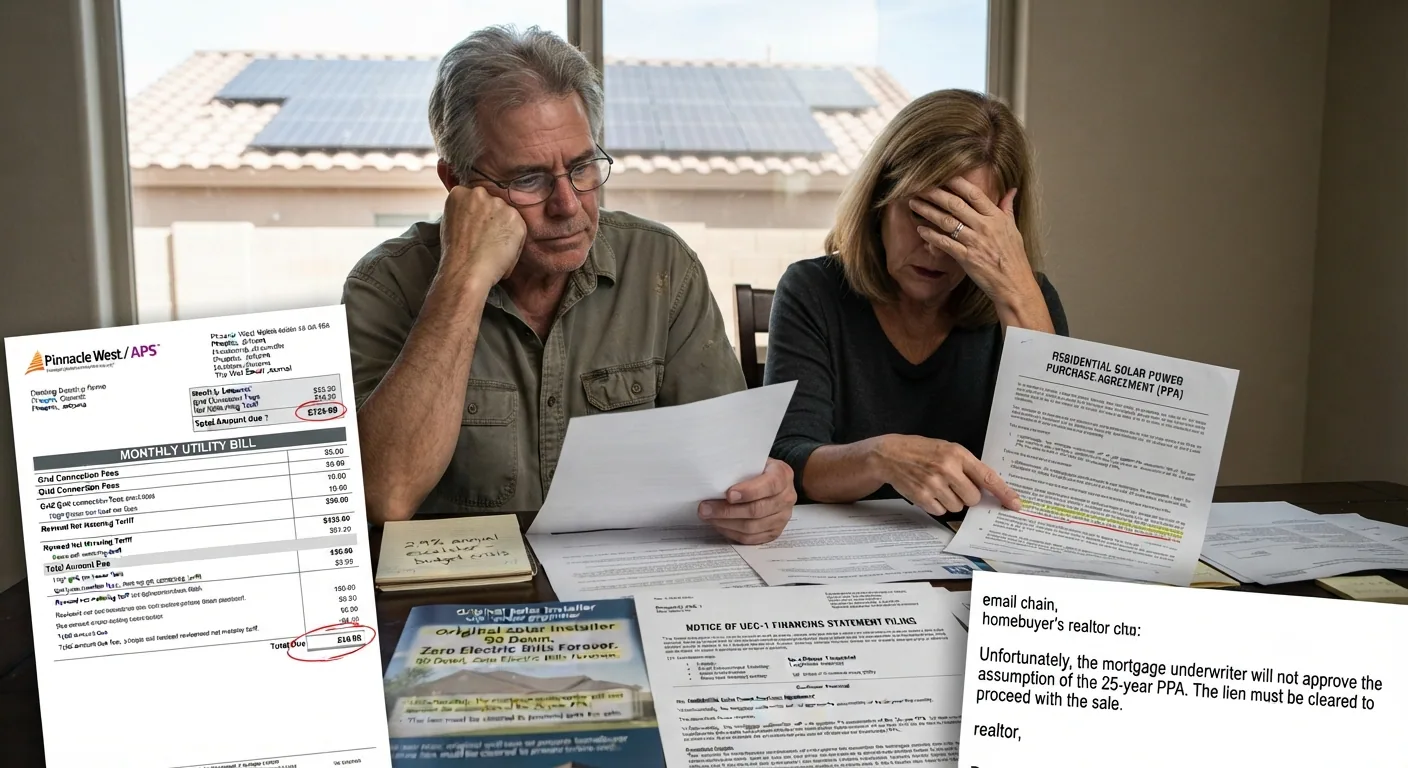
The Uninsurable Sunbelt: How Insurance Costs Threaten Southern Real Estate
⚠️ Truyện hư cấu phục vụ giải trí. Nhân vật & tình tiết là sản phẩm tưởng tượng.
For decades, the American Sunbelt served as the ultimate promise of economic optimism. Millions of families, retirees, and remote workers packed their belongings and headed south toward the sun-drenched coasts of Florida, the sprawling master-planned communities of Texas, and the high-growth corridors stretching across the American South. This historic migration was fueled by a simple, powerful equation. The cost of living was lower, state income taxes were nonexistent or minimal, warm weather promised a permanent outdoor lifestyle, and housing was relatively affordable compared to the congested urban centers of the Northeast and the West Coast. Cranes dotted the skylines from Jacksonville to Houston, and subdivisions marched steadily across formerly rural acreage, converting pine forests and scrubland into gleaming suburban utopias.
Yet beneath this glittering facade of perpetual growth, a profound structural reckoning has begun to unfold, threatening to crack the foundation of the Southern real estate boom. The primary culprit is not a sudden reversal of demographic desire, nor is it a traditional economic recession driven by interest rates alone. Instead, it is an escalating property insurance crisis born from the accelerating collision between economic migration and rising long-term climate carrying costs. For years, the true cost of living in high-risk environmental zones was heavily subsidized by insurance markets that failed to price future climate volatility accurately. Today, that bill has arrived, and it is reshaping the financial viability of homeownership across the Sunbelt in ways that economists and regional planners are only beginning to fully comprehend.
To understand how this crisis materialized, one must look at the fundamental business model of property and casualty insurance. Insurance operates on the pooling of risk and the predictability of historical loss patterns. For generations, actuaries could look backward at decades of weather data to calculate the statistical probability of a hurricane striking a specific stretch of coastline, a wildfire sweeping through a dry canyon, or a severe convective storm dropping baseball-sized hail across a suburban subdivision. Based on those historical models, private insurance companies collected annual premiums, paid out claims during anomalous disaster years, and generated a stable profit margin.
However, climate change has effectively shattered the rearview mirror that insurers have relied upon for more than a century. The frequency and intensity of billion-dollar weather disasters have escalated dramatically. Warming sea surface temperatures supercharge tropical cyclones, turning routine storms into catastrophic wind and water events before they make landfall. Prolonged megadroughts turn vast tracts of brush and timber into tinderboxes, while shifts in the atmospheric jet stream produce unprecedented inland flooding and severe convective storms. Insurers find themselves facing what the industry calls tail-risk events—disasters that were once considered statistical outliers but are now occurring with alarming regularity.
When these catastrophic losses hit regions with dense population growth and skyrocketing property values, the financial impact on insurance carriers is devastating. In states like Florida and California, a single severe hurricane season or a sequence of catastrophic wildfire years can wipe out decades of accumulated underwriting profits. Furthermore, primary insurers do not carry all of that risk themselves; they rely on global reinsurers—the companies that insure the insurance companies—to backstop their exposure. As global reinsurers absorbed massive multi-billion-dollar losses from climate disasters around the world, the cost of reinsurance skyrocketed, with rates surging by double or triple-digit percentages in a matter of a few short years.
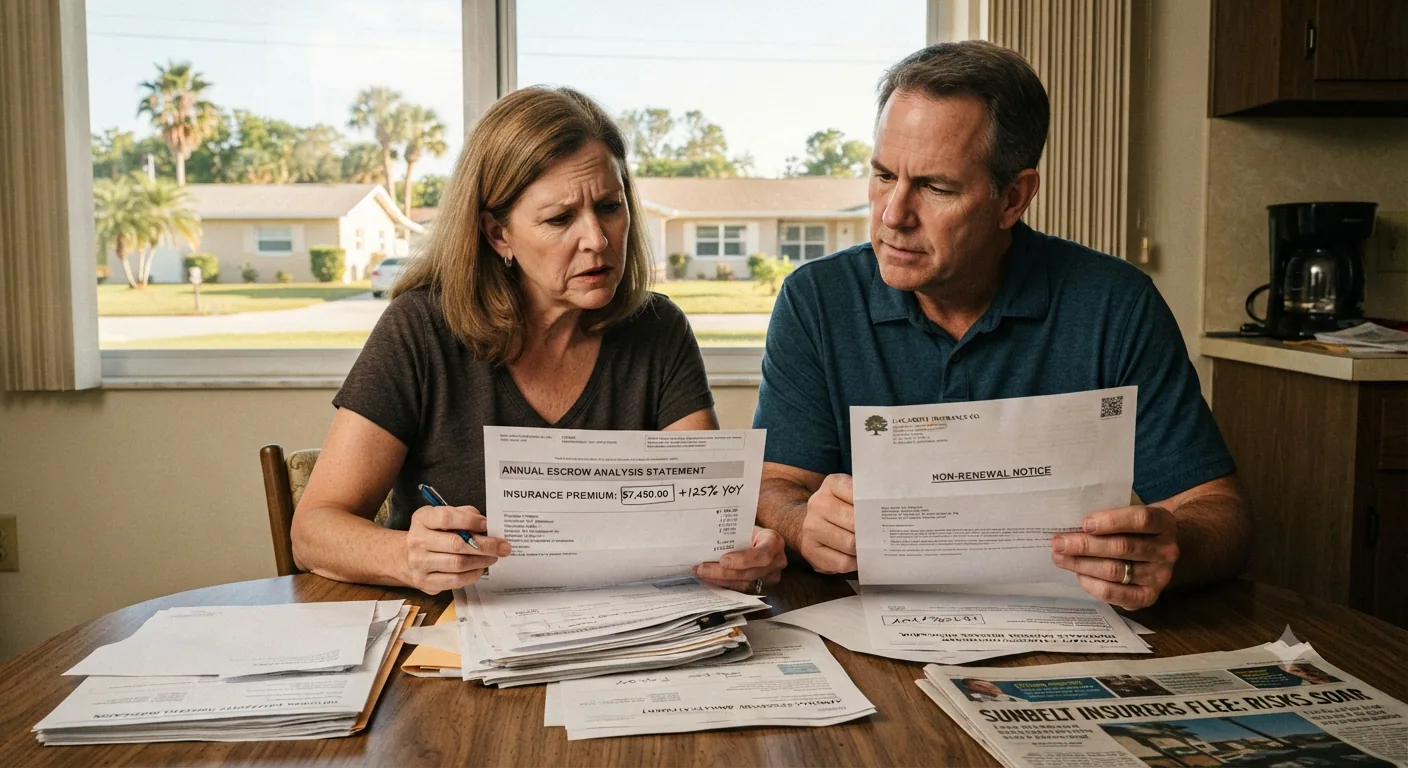
Faced with mounting liabilities and regulatory environments that historically resisted rapid rate adjustments, major private insurance carriers reached a breaking point. Rather than continuing to write policies in markets where potential losses vastly outweighed any realistic profit margins, household-name insurance companies began executing a coordinated retreat. Some carriers announced they were stopping the issuance of new policies entirely across entire high-risk states, while others instituted aggressive non-renewal notices for hundreds of thousands of existing policyholders. Homeowners who had faithfully paid their premiums for decades suddenly received letters stating that their coverage would not be renewed, leaving them scrambling to find alternative protection in a rapidly contracting market.
The market vacuum left by departing private insurers has forced a dramatic expansion of state-backed insurer of last resort programs, such as Citizens Property Insurance Corporation in Florida and equivalent entities in other vulnerable states. These residual market mechanisms were originally designed as a safety net of last resort for properties that could not find coverage in the voluntary market. Today, however, these state-backed entities have ballooned in size, becoming among the largest property insurers in their respective states. This dynamic introduces a massive systemic fiscal risk. Because these state entities lack the deep capital reserves and global reinsurance diversification of multi-national private corporations, a single catastrophic season featuring multiple major hurricanes making landfall in high-density areas could overwhelm their reserves. If that happens, the financial shortfall would inevitably cascade down to taxpayers and policyholders across the state through emergency assessments, creating a precarious economic loop where the public balance sheet is directly hitched to volatile climate exposure.
For the individual homeowner, this macroeconomic turbulence translates into a very personal and punishing financial squeeze. In many parts of the Sunbelt, the conversation has shifted entirely from the appreciation of home equity to the sheer monthly carrying cost of keeping a roof over one's head. Homeowners are increasingly experiencing a reality where escrow payments for property insurance and property taxes eclipse their core mortgage principal and interest.
Consider a typical middle-class family who purchased a suburban home in Florida or coastal Texas a few years ago. While their fixed mortgage rate locked in a predictable baseline for their principal and interest, their annual insurance premium did not remain static. Year after year, as insurers attempted to recoup mounting climate losses, premiums spiked by twenty, thirty, or even fifty percent annually. In extreme cases, homeowners who once paid a manageable two thousand dollars a year for comprehensive coverage watched their bills skyrocket past ten thousand or even fifteen thousand dollars annually. When combined with rising local property valuations that drove up tax assessments, the monthly escrow payment surged so aggressively that it fundamentally altered the household budget.
This escrow shortfall creates a severe liquidity crisis for families living on fixed or median incomes. Homeowners find themselves stretched to the absolute breaking point, forced to choose between cutting back on essential household expenditures or falling behind on their mortgage obligations. In worst-case scenarios, the inability to absorb these skyrocketing insurance costs triggers forced distress sales. Families who bought into the Sunbelt dream find themselves underwater not because of a traditional mortgage credit crunch, but because the ongoing operational cost of maintaining property insurance has turned their home into a financial liability.
The shockwaves of this insurance reckoning are also freezing transactional activity across the secondary mortgage market. When a prospective buyer goes under contract on a home, the transaction relies on a delicate ecosystem involving mortgage lenders, title companies, and underwriters. A core requirement for any federally backed mortgage is that the property must maintain adequate hazard and property insurance coverage.
In the current environment, obtaining that required coverage before the closing date has become a high-stakes obstacle course. Buyers who tour a home and agree on a purchase price are frequently blindsided when they contact insurance agents during the diligence period. They discover that the property is located in a high-risk flood or wind zone, and the quotes for annual insurance coverage are so astronomical that they destroy the debt-to-income ratios required by the lender. Deals that took months to negotiate suddenly collapse at the eleventh hour because the buyer cannot secure affordable coverage, or because the insurance binder comes in thousands of dollars higher than projected, rendering the mortgage qualification invalid.
This friction directly challenges the operational assumptions of the secondary mortgage market, including government-sponsored enterprises like Fannie Mae and Freddie Mac. These entities purchase millions of residential mortgages from primary lenders, packaging them into mortgage-backed securities that provide liquidity to the broader financial system. If properties across vast swaths of the Sunbelt become functionally uninsurable or subject to catastrophic valuation drops due to localized insurance abandonment, the collateral backing those mortgages is severely compromised. While federal housing agencies continuously update their servicing guidelines and property insurance requirements to navigate these operational hurdles—such as adjusting rules around actual cash value for roofs versus full replacement cost—the underlying tension remains unresolved. Lenders are increasingly forced to grapple with the reality that a mortgage is only as secure as the physical asset protecting it, and a home that cannot be insured or rebuilt after a disaster represents a profound systemic risk to the lender's balance sheet.
As the market begins to aggressively reprice risk, a fascinating and disruptive socioeconomic phenomenon is taking shape across the Southern landscape: the emergence of climate gentrification. Historically, real estate valuation was dictated by proximity to water, aesthetic views, and coastal access. Waterfront properties commanded the highest premiums, and developers chased every linear foot of beachfront or bayside acreage to maximize luxury returns.
Today, that paradigm is turning completely upside down. The traditional hierarchy of real estate value is being rewritten by elevation and topography. Wealthier buyers, institutional investors, and risk-conscious developers are systematically pivoting away from low-lying coastal waterfronts and marsh-adjacent subdivisions. Instead, they are turning their attention toward high-elevation, low-risk inland parcels. These areas, which were once considered secondary or undesirable because they lacked immediate waterfront views, are now commanding premium pricing precisely because they sit safely above storm surge zones and outside of FEMA special flood hazard areas.
This migration of capital toward safer elevations is driving up property values in inland communities, pricing out longtime working-class residents and transforming quiet rural or semi-urban towns into high-demand enclaves. Conversely, low-lying coastal and flood-prone neighborhoods face the terrifying prospect of depreciation. Homeowners in these vulnerable zones find themselves trapped in a Catch-22: their properties are becoming increasingly expensive to insure and maintain, yet the pool of prospective buyers willing to take on that long-term climate liability is shrinking rapidly. This divergence creates a two-tiered housing market where geographic safety becomes an explicit luxury good, deepening social and economic inequalities along environmental lines.
The implications
Bài viết liên quan
The Maturity Wall: How Trillions in Distressed Commercial Mortgages Are Testing Regional Banks
The Golden Handcuffs: Why America’s 3% Mortgages Have Frozen the Housing Market in Place
Harvest of Glass: The Bitter Civil War Splitting Midwestern Farming Towns Over Solar Leases