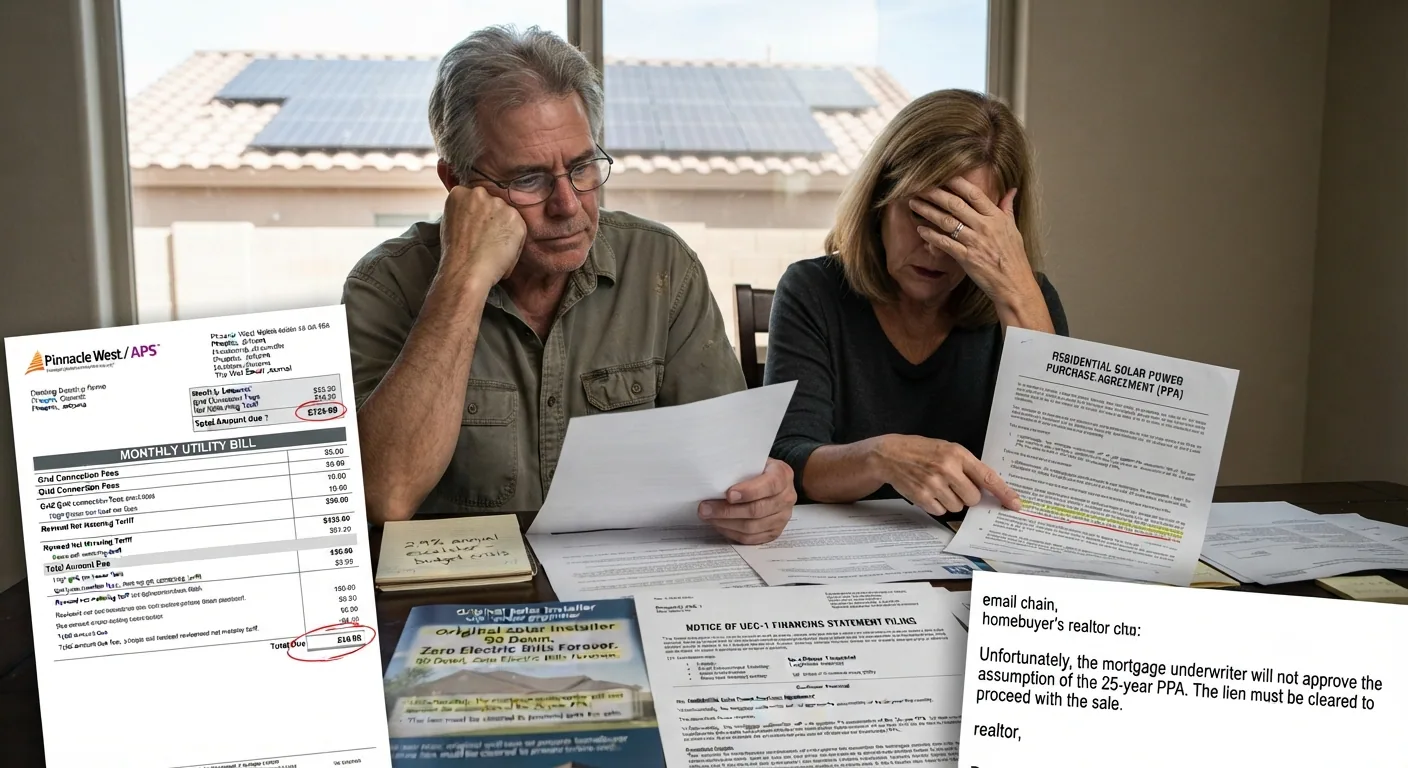
Stop Leaving Money on the Table: Why Traditional Savings Accounts Are Costing You Wealth
⚠️ Truyện hư cấu phục vụ giải trí. Nhân vật & tình tiết là sản phẩm tưởng tượng.
For as long as most of us can remember, the standard ritual of growing up involved walking into a traditional brick and mortar bank, handing over a few crumpled bills, and opening a savings account. We were told by our parents, our grandparents, and the friendly tellers behind the counter that saving money was the ultimate virtue. And in many ways, it still is. Setting aside cash for a rainy day, building a buffer against the unexpected, and preparing for future milestones are foundational pillars of financial health. But there is a massive, unspoken catch that the traditional banking system has quietly benefited from for decades. That catch is the negligible interest rate.
If you look closely at your statement from a traditional high street bank, you will likely see an interest rate hovering around zero point zero one percent. That is not a typo. For every one thousand dollars you leave parked in that account, the bank graciously rewards you with about ten cents over the course of an entire year. Meanwhile, the cost of groceries, housing, healthcare, and utilities continues to rise year after year. This discrepancy points to a quiet erosion of your hard-earned wealth. When your cash sits in a stagnant account while inflation steadily chips away at its purchasing power, you are experiencing what financial experts call cash drag. Your money is not working for you. In fact, it is actively losing value.
Fortunately, a quiet revolution has been taking place in the world of personal finance. The rise of digital banking and financial technology has dismantled the old barriers, giving everyday savers access to high yield savings accounts, often abbreviated as HYSAs. These modern accounts offer interest rates that can be ten, twenty, or even fifty times higher than what traditional institutions provide. By shifting your cash reserves from a legacy bank to an optimized digital platform, you can transform your emergency fund from a stagnant pool into a dynamic, compounding asset that helps protect your financial future.
To understand why this shift matters so much, we first need to look at the mechanics of inflation and why leaving your cash in a low yield account is mathematically detrimental. Inflation is the general increase in prices and the subsequent fall in the purchasing value of money over time. If inflation is running at three percent a year, a basket of goods that costs one hundred dollars today will cost one hundred and three dollars next year. If your money is sitting in an account paying zero point zero one percent interest, your nominal balance remains almost identical, but your actual buying power shrinks significantly. You can buy fewer groceries, pay for less fuel, and afford fewer essentials than you could twelve months prior.
This is where the concept of an inflation hedge comes into play. While riskier assets like stocks and real estate are traditionally used to beat inflation over the long term, they come with volatility and cannot be touched in an emergency without risking capital losses. Cash, on the other hand, needs absolute stability and instant availability. An HYSA bridges this gap. By paying an interest rate that is much closer to or even matching prevailing economic conditions, a high yield savings account minimizes the erosion caused by inflation. It ensures that your liquid cash reserves retain as much of their purchasing power as possible while remaining completely safe and secure.
Many people wonder how online banks can afford to offer such significantly higher yields compared to the massive commercial institutions with towering glass headquarters downtown. The answer lies in overhead. Traditional banks maintain thousands of physical branches, pay for expensive commercial real estate, hire massive local staffing teams, and manage legacy technology systems that cost billions to maintain. All of those expenses are ultimately funded by paying their depositors next to nothing on their savings.
Digital banks, conversely, operate primarily online. They do not have the heavy operational costs of a physical branch network. By cutting out the brick and mortar overhead, these institutions pass the savings directly back to the consumer in the form of substantially higher interest rates. This business model has disrupted retail banking and empowered consumers to demand a fair return on their liquid capital.
Of course, when people hear about online banks offering high yields, a very reasonable and crucial question immediately arises. Is my money safe? People remember historical banking panics, and the idea of putting hard earned savings into a digital only institution can feel unsettling at first. Fortunately, the safety net for your money remains robust, provided you know what to look for.
The gold standard of banking safety in the United States is deposit insurance provided by the Federal Deposit Insurance Corporation, commonly known as the FDIC. For credit unions, the equivalent is the National Credit Union Administration, or NCUA. When you open an account with a bank or credit union that is backed by the FDIC, your deposits are protected up to two hundred and fifty thousand dollars per depositor, per ownership category, per institution. This means that even if the digital bank were to completely fail or go out of business, the federal government steps in and guarantees your principal balance up to that limit.
When evaluating a high yield savings account, checking for FDIC or NCUA insurance is non negotiable. Many digital banks partner with traditional chartered partner banks to provide this coverage, often spreading deposits across a network of institutions to ensure that larger balances remain fully insured. By ensuring your chosen platform carries this federal backing, you get the best of both worlds: the high yields of a modern fintech platform combined with the ironclad security of government backed insurance.
Beyond safety, the true magic of an HYSA is unleashed through the power of compounding interest. Albert Einstein famously called compound interest the eighth wonder of the world, and once you watch it work within a high yield account, you understand why. Simple interest is calculated only on the principal amount you originally deposited. Compound interest, however, is calculated on the principal amount plus all the accumulated interest from previous periods.
In an HYSA, interest is typically calculated daily and paid out monthly. This means that every single month, the interest you earned is added to your balance, and the following month, you earn interest on that newly enlarged total. At first, the snowball rolls slowly. An extra five dollars here, twelve dollars there. But over months and years, as the balance grows and the compounding cycles repeat, the momentum accelerates.
Imagine parking an emergency fund of twenty thousand dollars in a traditional bank earning zero point zero one percent. After a year, you have gained a paltry two dollars. Now imagine placing that same twenty thousand dollars in an HYSA yielding four or five percent. That same money suddenly generates eight hundred to one thousand dollars in pure interest over the course of the year, entirely passively. You did not work extra hours, you did not take on risky investments, and you did not tie up your money in a certificate of deposit. You simply stopped leaving your cash on the table and let compounding interest do the heavy lifting.
This brings us to one of the most critical elements of personal financial architecture: establishing a resilient emergency fund. Financial advisors universally recommend keeping three to six months of essential living expenses tucked away in a liquid account. These funds are your financial shock absorber. They protect you if you experience unexpected job loss, sudden medical bills, urgent car repairs, or any of life's inevitable curveballs.
Without an emergency fund, people are forced to rely on high interest credit cards or personal loans when emergencies strike, plunging themselves into cycles of expensive debt. But having an emergency fund creates profound psychological peace of mind. It allows you to sleep soundly at night knowing that a sudden crisis will not derail your long term financial goals.
However, the placement of your emergency fund has historically been a dilemma. If you invest your emergency fund in the stock market to chase higher returns, you risk having to sell during a market downturn, locking in severe losses. If you lock your money into a long term certificate of deposit to secure a fixed rate, you might face heavy penalty fees if you need to withdraw the cash early for a genuine emergency.
An HYSA solves this dilemma entirely by offering liquidity. Liquidity refers to how quickly and easily an asset can be converted into cash without losing value. Because an HYSA is a savings account, your money is fully accessible. While federal regulations historically limited certain types of withdrawals, most modern HYSAs allow seamless electronic transfers to your primary checking account, usually clearing within one to three business days. Some even provide debit cards or ATM access for immediate needs. You get the liquidity of a checking account combined with the growth potential of a high yield vehicle.
Another vital aspect of managing your cash effectively is the psychological separation of funds. Human beings are prone to mental accounting, and when all of our money sits together in a single checking account, our brains tend to treat it as spending money. If you see five thousand dollars sitting in your checking account, you are much more likely to indulge in impulsive purchases, dining out too often, or buying things you do not truly need because the capital feels abundant.
By opening an HYSA at a digital bank separate from your day to day checking account, you create a powerful psychological barrier. Your everyday operating cash lives at your local or primary checking institution, handling bills, groceries, and regular monthly expenses. Your core emergency reserves and intermediate savings goals live safely tucked away in the separate online HYSA. Because the money is not instantly visible every time you log in to check your debit card balance, you are far less tempted to dip into it for non essential lifestyle inflation. This physical and digital separation acts as a safeguard against your own spending habits, ensuring that your safety net remains intact.
Transitioning to a high yield savings account is a straightforward process, yet many people delay it simply out of inertia. Opening an account typically takes less than ten minutes online. You will need your government issued identification, your social security number or tax identification number, and the routing and account numbers of your current bank to fund the initial transfer. Once the account is verified and funded, the system runs largely on autopilot. Interest accrues daily, statements arrive monthly, and your money quietly grows in the background while you focus on your career, family, and daily life.
When choosing an HYSA, it helps to look beyond just the headline interest rate. While the annual percentage yield is certainly the primary driver, pay close attention to other factors. Check whether the institution charges monthly maintenance fees or requires a minimum balance to earn the advertised rate. The best modern HYSAs have zero monthly fees and no minimum deposit requirements, making them accessible whether you are starting your financial journey with five hundred dollars or optimizing a nest egg of fifty thousand dollars. Also, look at the user experience of their mobile app and website, customer service availability, and transfer speeds.
It is also worth noting that interest rates on HYSAs are variable. Unlike fixed rate certificates of deposit or government bonds, high yield savings account rates fluctuate based on broader macro
Bài viết liên quan
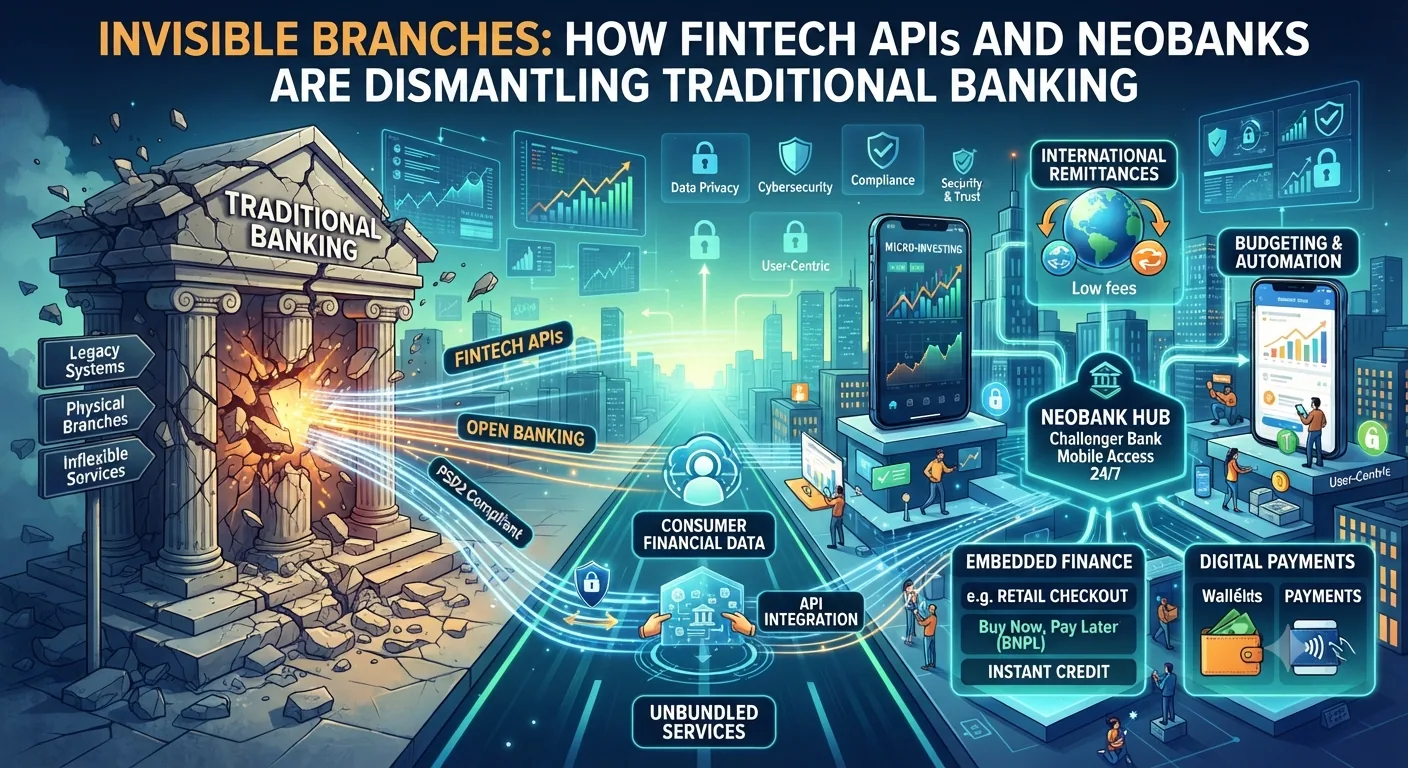
Invisible Branches: How Fintech APIs and Neobanks Are Dismantling Traditional Banking
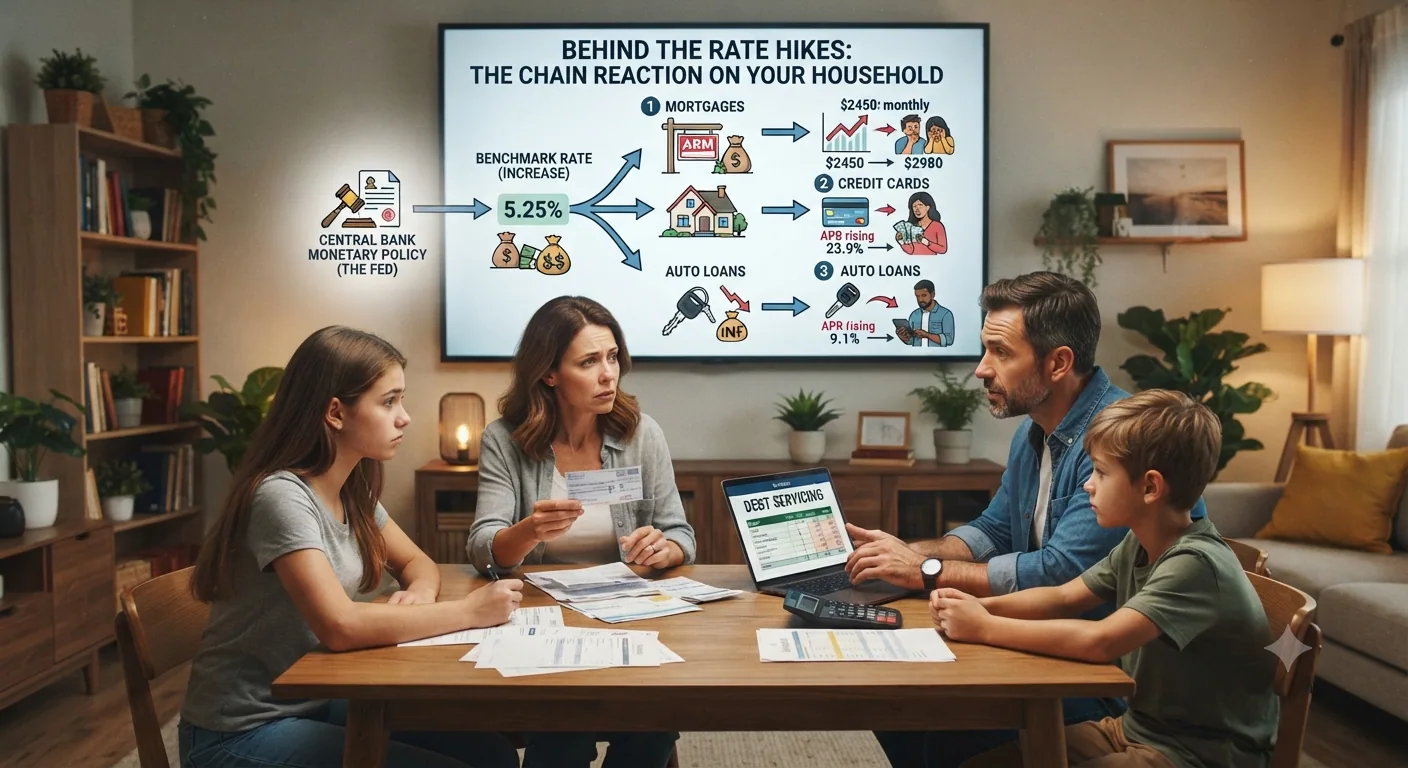
Behind the Rate Hikes: How Central Bank Decisions Impact Mortgages, Debt, and Daily Life
Harvest of Glass: The Bitter Civil War Splitting Midwestern Farming Towns Over Solar Leases