Slow Travel: Why Doing Less Leads to a Richer Journey
⚠️ Truyện hư cấu phục vụ giải trí. Nhân vật & tình tiết là sản phẩm tưởng tượng.
In the modern age of tourism, a peculiar phenomenon has taken over the way we move across the globe. We have transformed the sacred act of travel into an endurance sport. Airports are crowded with weary souls clutching itineraries packed tighter than morning commuter trains. We arrive in a historic European capital or a vibrant Asian metropolis with a digital checklist longer than a grocery list, determined to see every museum, monument, and Michelin-starred restaurant in forty-eight hours. We rush from the museum queue to the taxi rank, snapping photos not with our eyes, but through the glass of a smartphone screen, desperate to prove to the digital void that we were there. This is the era of bucket-list tourism, a relentless marathon where the destination is merely a backdrop for a digital trophy. But beneath the polished surface of these whirlwind tours lies a quiet, exhausting reality. We return from our holidays needing another holiday just to recover from the vacation. We have seen everything, yet we have experienced nothing. We have accumulated snapshots, but we have missed the soul of the places we visited. This realization is what breathes life into the movement known as slow travel, a philosophy that invites us to put down the stopwatch, unpack our bags in a single place for a meaningful duration, and trade the frantic pursuit of quantity for the profound richness of depth.
To truly understand why slow travel is becoming the antidote to our collective burnout, we must first examine the hidden costs of the fast-paced travel model. When your itinerary is dictated by a desire to conquer ten countries in two weeks, every moment is governed by clock-watching. You check into a hotel not to settle in, but to drop your bags before rushing out the door. You eat meals on the run, grabbing whatever is closest to the tourist attraction you are trying to squeeze in before closing time. The psychological toll of this approach is immense. Travel fatigue sets in rapidly, transforming what should be a restorative journey into an exercise in endurance. Your brain becomes saturated with a blur of architecture, foreign languages, and crowded streets, until every cathedral looks the same and every cobblestone alleyway blends into a monotonous grey. Furthermore, this style of tourism creates a barrier between you and the destination. You remain an outsider peering through a glass window, interacting only with hospitality workers, ticket sellers, and other tourists. You never get to know the rhythm of the city, the temperament of its people, or the subtle nuances of its daily life. You are consuming a destination like fast food, quick and convenient, but ultimately leaving you empty and craving something more substantial.
Slow travel offers a radical departure from this exhausting treadmill. At its core, slow travel is not merely about moving at a physically slower pace, though that is certainly part of it. It is an intentional mindset shift. It is about choosing to stay longer in fewer places, allowing yourself the luxury of time to let a destination reveal itself naturally. Instead of visiting five different cities in a single week, a slow traveler might rent an apartment in a single neighborhood for a month, or spend two weeks exploring a quiet coastal village. This shift in duration changes everything. When you know you are not leaving tomorrow, the desperate urgency to see everything evaporates. The pressure lifts, and suddenly you have the mental space to notice the small details that make a place unique. You begin to observe the local rituals, the morning routines of shopkeepers sweeping their steps, the chatter of neighbors gathered at the local café, and the changing quality of light across the rooftops as the afternoon gives way to evening. You stop being a passive spectator and start becoming an active participant in the local ecosystem, even if only for a brief chapter of your life.
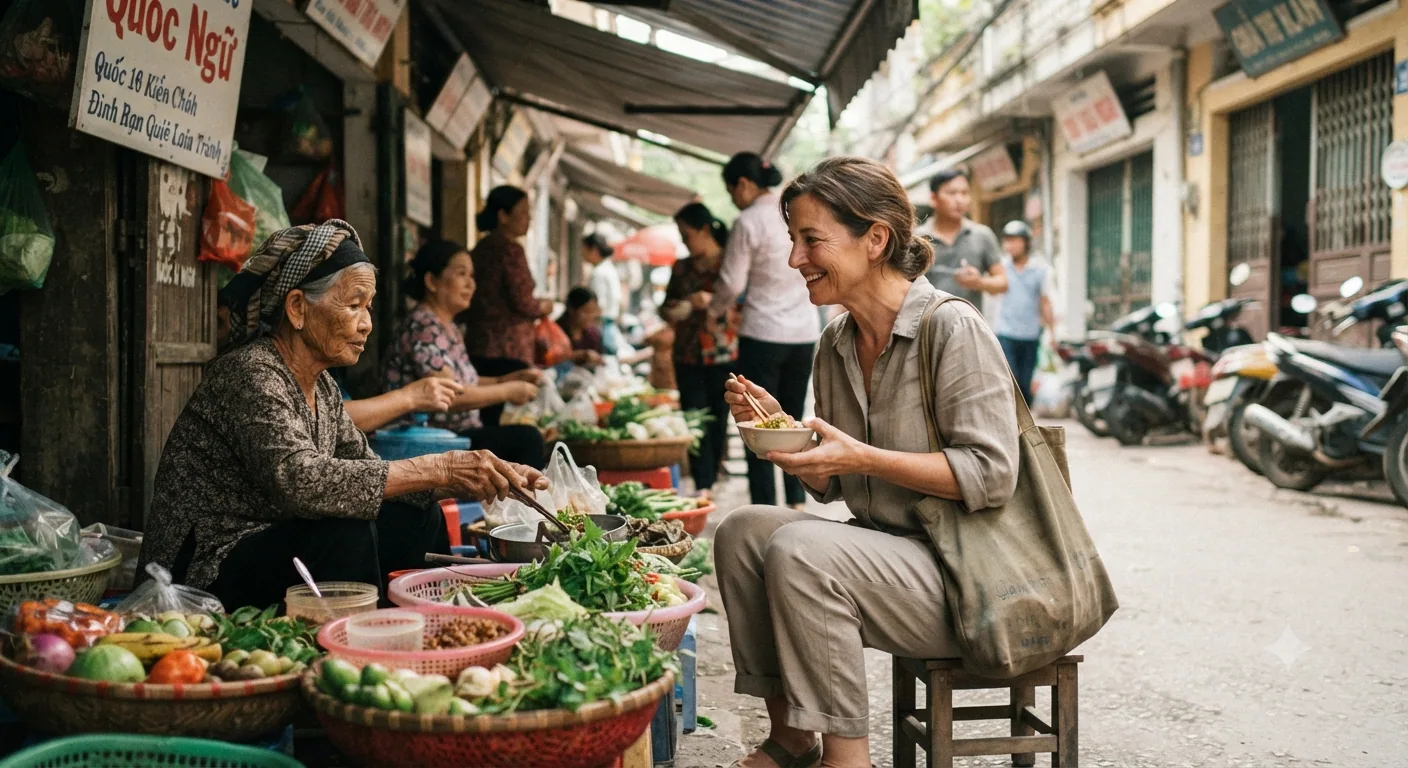
Embracing this philosophy requires practical adjustments to how we plan and experience our journeys. One of the most rewarding ways to embed yourself into a local neighborhood is to make the morning market your first daily ritual. While other tourists are lining up outside famous museums at nine in the morning, you can wander through a bustling neighborhood market where locals are haggling over fresh vegetables, fragrant herbs, and regional cheeses. This is where the true heartbeat of a culture resides. You see the seasonal produce that dictates the local cuisine, you hear the cadence of the native language spoken without theatrical performance for tourists, and you can practice the art of observation. Visiting the same market stall day after day transforms you from an anonymous face into a familiar presence. The vendor recognizes your smile, teaches you the local word for a particular fruit, and perhaps recommends the best way to cook it. These micro-interactions are the building blocks of authentic engagement, far more valuable than any selfie in front of a crowded landmark.
Another powerful gateway to cultural immersion is language. You do not need to become fluent to practice slow travel, but learning a handful of basic phrases is an essential sign of respect and curiosity. When you greet a shopkeeper in their native tongue, ask how much something costs, or say thank you with the proper local accent, you break down the invisible wall that separates the tourist from the resident. People respond to this effort with warmth and generosity. It signals that you are not just passing through to exploit their home for your photo album, but that you genuinely care about connecting with their world. Even when your pronunciation is clumsy, the attempt itself creates a bridge. It invites a smile, a correction, or a conversation that might lead to an unexpected recommendation for a hidden park, a family-run bakery, or a local festival happening down the street.
Patronizing family-run shops and independent neighborhood businesses is another cornerstone of the slow travel ethos. In a world increasingly dominated by global franchise chains and souvenir shops selling mass-produced trinkets made thousands of miles away, choosing where you spend your money matters. When you buy your morning pastry from the small bakery where the baker has been kneading dough for forty years, or when you eat lunch at a tiny trattoria with handwritten menus that change daily based on what was fresh at the market, you are supporting the local economy and preserving heritage. These establishments are the guardians of culinary tradition and neighborhood character. By sitting at their tables, you are participating in a living tradition rather than a manufactured tourist experience. You learn about regional ingredients not from a textbook, but from the passionate explanation of an owner who takes pride in every dish served.
This brings us to the profound value of culinary habits in cultural immersion. Food is the universal language of culture, carrying history, geography, and social values in every bite. Fast-paced travel often forces us into tourist-trap restaurants situated right next to major monuments, where menus are translated into five languages and the food is generic and overpriced. Slow travel rescues us from this culinary mediocrity. When you have time, you can seek out where the locals actually eat. You can take a cooking class taught by a home cook, learn the specific techniques of rolling pasta or balancing spices, and understand the cultural philosophy behind meal times. In many cultures, a meal is not just fuel; it is a sacred social ritual meant to be savored over hours of conversation. Slowing down allows you to sit at the table without watching the clock, experiencing the joy of shared food and stories in a way that nourishes both the body and the spirit.
The contrast between depth and destination tallies is stark. The traditional bucket-list approach encourages a mindset of acquisition. Travel becomes a numbers game: how many countries have you been to, how many UNESCO World Heritage sites have you checked off, how many photos did you take? This mindset fosters a superficial relationship with the world, where places are reduced to checkmarks on a spreadsheet. Depth, on the other hand, is about resonance. It is about the feeling of the morning mist over a valley you have watched for a week, the deep friendship formed with a local guesthouse owner, or the quiet understanding of a cultural custom that once seemed foreign and strange. One deep, immersive journey where you come to truly know the rhythms of a single community will forever outweigh ten rushed trips where you remember little more than airport terminals and crowded bus tours. Depth leaves an indelible mark on your character; tallies only collect digital dust.
Furthermore, adopting a slow travel mindset acts as a powerful antidote to travel fatigue. By reducing transit days and eliminating frantic daily schedules, your nervous system finally gets the rest it needs. Travel should ultimately be restorative, expanding our worldview while replenishing our inner energy. When you give yourself permission to do nothing on a Tuesday afternoon—perhaps sitting on a park bench reading a book, or watching the clouds drift over a mountain range without feeling guilty that you are not sightseeing—you reclaim the true essence of leisure. You realize that rest is not a waste of vacation time; it is an essential ingredient of it. Without downtime, we cannot process our experiences. We need moments of stillness to let new impressions settle, to reflect on what we are learning, and to allow our perspective shifts to take root.
As you immerse yourself in the daily neighborhood life of a foreign place, a quiet internal transformation begins to occur. You start to see your own life back home through a different lens. You notice the cultural habits of your own society that you previously took for granted. You begin to question the relentless speed of modern life, the obsession with productivity, and the constant connectivity that defines contemporary existence. This is perhaps the greatest gift of slow travel: it shifts your perspective not just outward toward the world, but inward toward yourself. You return home not just with souvenirs or photos, but with a renewed sense of patience, a greater appreciation for simplicity, and a permanent curiosity about the diverse ways human beings organize their lives and find joy across the globe.
Ultimately, slow travel teaches us that the world is not a theme park designed to be conquered in record time. It is a vast, beautiful tapestry of human stories, local histories, and living communities waiting to be appreciated with patience and respect. By choosing to stay longer, rush less, and engage deeper, we step off the tourist treadmill and onto a path of genuine discovery. We discover that the richest moments of travel are rarely found at the end of a crowded queue or inside a famous monument, but rather in the quiet, unexpected spaces in between: a shared smile across a market stall, a lingering conversation over an unhurried meal, and the comforting realization that, no matter where we roam in this wide world, taking the time to truly listen and observe will always lead us back to a deeper understanding of ourselves and our shared humanity.
Bài viết liên quan
Stepping into the Unknown: How Solo Travel Sharpens Resilience and Perspective
Leave No Trace: The Shift Toward Accountable and Regenerative Travel
Harvest of Glass: The Bitter Civil War Splitting Midwestern Farming Towns Over Solar Leases